
By Ms. Pulido | Aula Bloom
Being out of the classroom takes preparation! As a bilingual second grade teacher, I want my students to keep learning and feel comfortable with their routines, even when I’m away. That starts with leaving clear directions and materials that are easy to find.
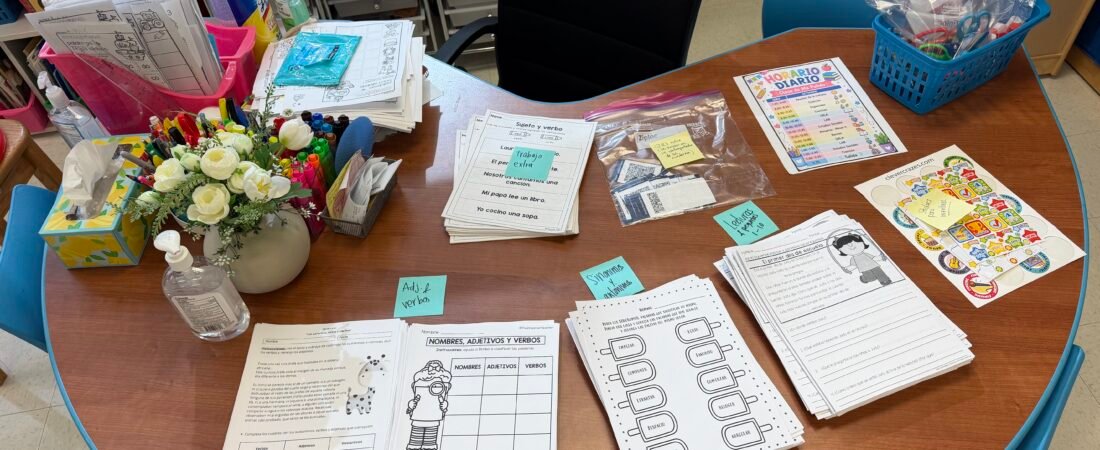
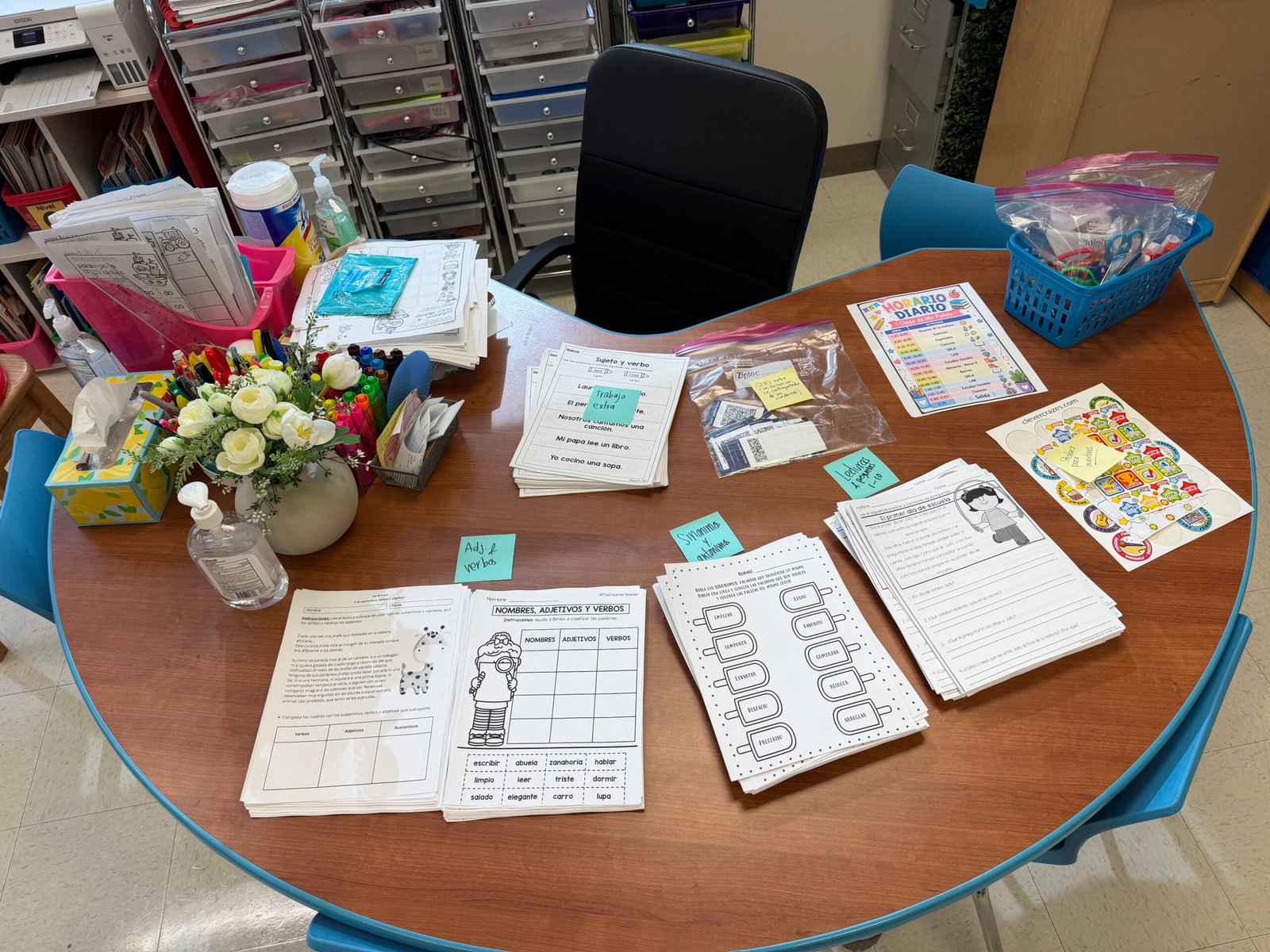
The photo shows my classroom setup: copies separated into stacks, sticky notes identifying activities, a printed daily schedule, extra work, and supplies nearby. These small details give the substitute a place to start.
Here are a few things to have ready before your next absence.
1. A clear daily schedule
Leave a schedule with times for each subject, specials, lunch, recess, and dismissal. Add details that someone new to your classroom would need: where to take students, how to line up, and what to do during transitions.
The National Education Association recommends including schedules and classroom procedures alongside your lesson plans. Even routines that feel obvious to us may be unfamiliar to a substitute.
2. Copies organized and labeled
In my photo, activities are separated into stacks for reading, nouns, adjectives, verbs, synonyms, and antonyms. Sticky notes make each set easier to identify.
To make this setup even easier to follow, label each stack with the subject, time, and a short direction. For example:
9:30 — Spanish Reading: Read the passage together, discuss it, and have students answer the questions.
Leave enough copies, a completed example or answer key, and a place for finished work.
3. Directions for your bilingual classroom
A bilingual classroom needs a little extra explanation. Specify which lessons are taught in Spanish and which are taught in English, following your classroom’s language allocation. Include the vocabulary, visuals, and sentence stems students already use.
For example, a reading response might include:
- Español: “El personaje se siente ___ porque ___.”
- English: “The character feels ___ because ___.”
Colorín Colorado explains that supports such as charts, first-language resources, and accessible text help English learners access academic content. My suggestion is to leave those familiar supports ready for the substitute, too.
4. Classroom information beyond the lessons
Keep a substitute folder with the class roster, seating chart, emergency procedures, dismissal directions, and the name of a nearby teacher who can help. Include necessary student supports and service schedules in a confidential section for the substitute.
Also explain your attention signal, restroom routine, and behavior expectations. Clear directions help the substitute maintain familiar routines.
5. Extra work and supplies
The “trabajo extra” stack in my photo provides an option if students finish early. A familiar reading passage, writing response, or review activity can also serve as a backup if technology is unavailable.
NEA recommends preparing extra materials and explaining that the substitute does not need to complete every optional activity. Keep pencils, crayons, scissors, and glue easy to locate, too.
6. A space for substitute notes
Leave a simple page asking what students completed, what needs another look, and whether anything requires follow-up. A quick note can help you plan your first day back.
Preparing sub plans takes time, but a clear schedule, labeled materials, and familiar language supports can make the day easier for everyone. Start with one folder and a few organized stacks—you can build from there!
Sources and further reading