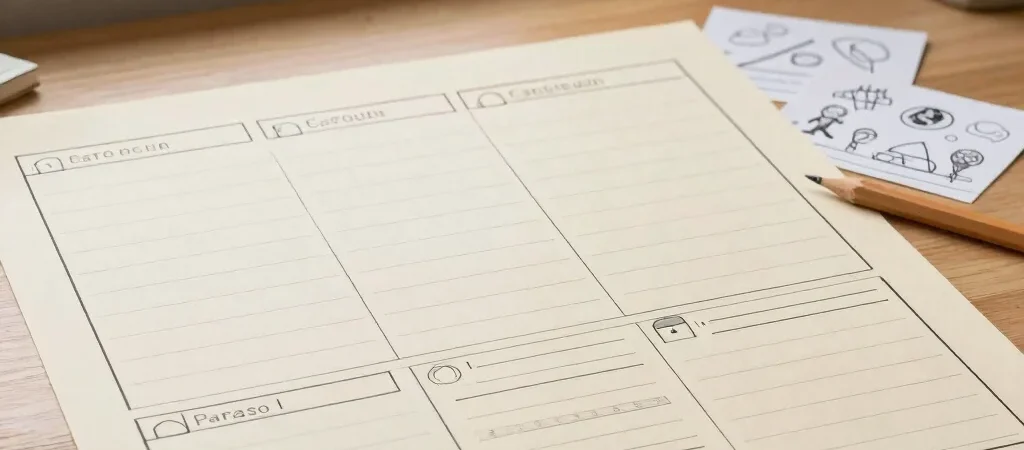
A handout can look polished and still be hard to use: too many directions, tiny spaces to write, or prompts that assume every student will start in the same place. When I prepare practical materials for educators, I want the page to offer a clear path without taking away a teacher’s judgment. That starts with deciding what the resource needs to do—and what it does not.
Give the page one job
Choose the main purpose before adding prompts or decoration. A reading response page might help students gather evidence; a lab sheet might guide observation; a discussion card might help a group listen and build on ideas. When a page tries to teach directions, assess learning, record notes, and extend the task all at once, students may have trouble seeing where to begin.
Write the student action in plain language near the top. Keep supporting directions close to the step they explain, and remove anything that does not help a student start, continue, or reflect. The result is often a quieter-looking page that works harder.
Build in room to respond
Think about how students might show their thinking before you decide how much writing space to provide. A prompt may call for a sentence, a labeled sketch, a calculation, or notes for a conversation. Leave enough room for the likely response, but avoid making the layout so fixed that a student with a different approach has nowhere to go.
A flexible resource can include one core prompt and a small choice of response formats. For example, students might explain an observation in writing or sketch it and add labels. You can adapt that choice for younger learners, multilingual students, or a class that benefits from talking through an idea before writing.
Test it before the copies
Read the directions as if you have not seen the lesson plan. Can you tell what to do first? Can you tell what to do when you finish? If either answer depends on an explanation you have not written down, add a short cue or plan to give that instruction aloud.
Then look at the page at student-eye level: on a screen, in grayscale, or printed at the size you will actually use. Check that headings stand out, writing areas are usable, and no decorative element competes with the task. A resource is ready when it is clear enough to understand and still leaves you room to adapt it for the classroom in front of you.